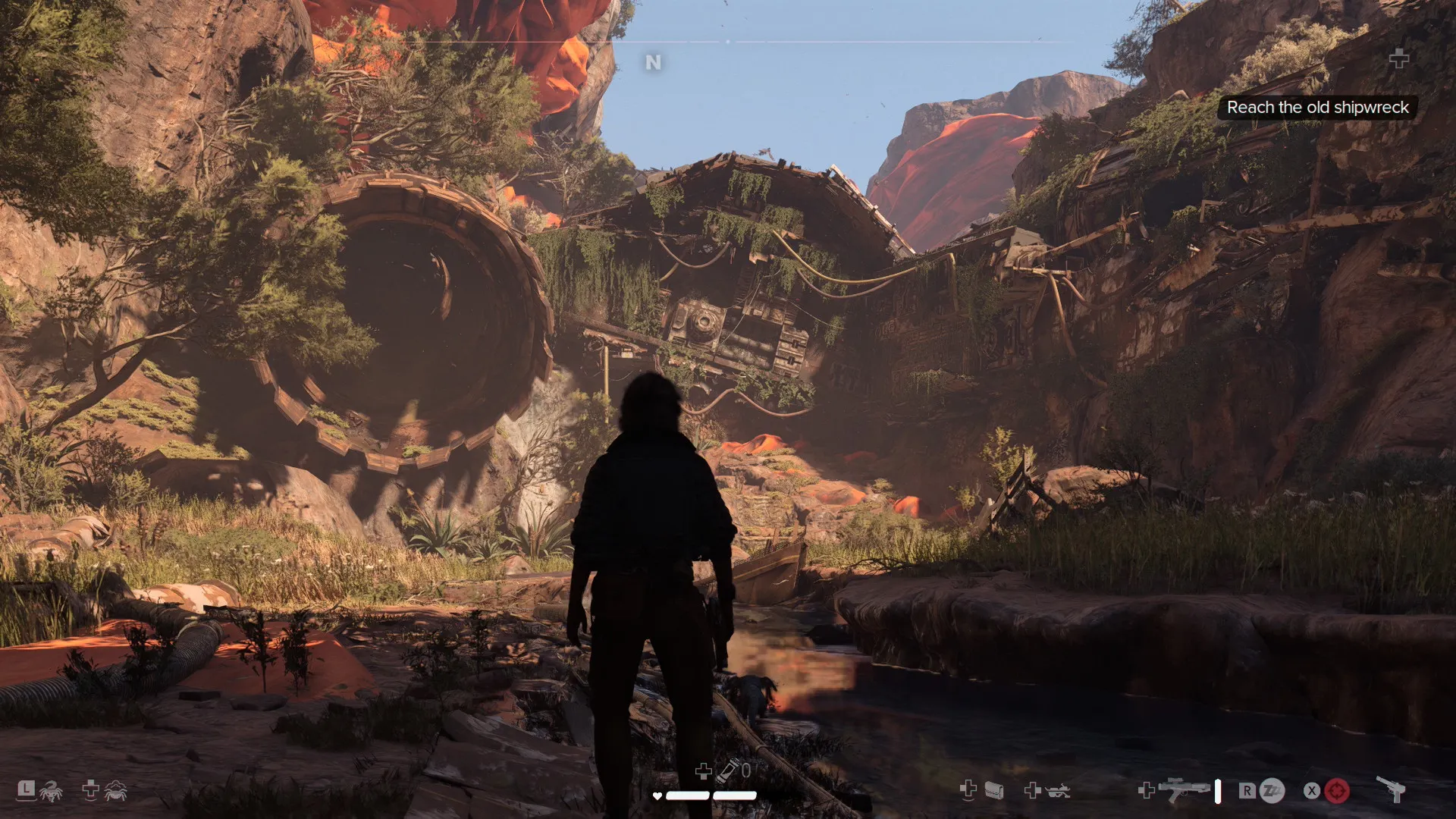
This scene runs on 20 watts. A gaming PC draws 150–200+ watts just for the GPU. Switch 2’s entire system uses a fraction of that power.
Portable gaming has defined my relationship with the medium. The DS Lite sparked it in childhood. Today, my Switch and Steam Deck turn subway commutes into gaming sessions. There’s something magical about high-fidelity experiences that fit in a bag, and I’ll trade max settings for portability every time.
The Switch nailed the hybrid concept: seamless transitions between handheld and TV. My gaming PC sits at home pulling hundreds of watts. What fascinates me more is what engineers achieve within tight power budgets. Give me 10 watts and ingenuity over 200 watts of brute force.
Which explains why I’ve lurked in hardware speculation threads for years, parsing every leaked specification and blurry PCB photo. As a software developer with five years in the industry, I’ve watched these leaks through the lens of someone who codes for a living but nerds out over hardware constraints. Now the console exists, and I’m evaluating it through a new lens.
I’m now studying computer engineering in grad school, the classic geekdom to academia pipeline. The same day of my first Computer Architecture lecture, where my professor discussed domain-specific acceleration and thermal constraints, I got home and booted Star Wars Outlaws on Switch 2. Theory became sweet, sweet practice: Moore’s Law dead, energy efficiency paramount, specialized hardware compensating for modest clocks. The lecture posited it, Outlaws proved it.
T239’s efficiency isn’t luck, nor are its demonstrative games miracles. It’s deliberate architectural choices prioritizing watts-per-frame over raw teraflops. This article examines how those choices enable current-gen gaming in a portable form factor, acknowledging the challenges, caveats, and creativity.
This won’t exhaustively compare Switch 2 to Steam Deck or PS5. Architectural differences (ARM vs x86, console vs PC, Nvidia vs AMD) and developer experience confound direct comparisons. A $450, 1.4 cm tablet with 2020–2022 components won’t match PS5’s raw power. That’s not the point. The point is showing how architectural advantages deliver compelling experiences within thermal constraints that enable true portability.
The Hardware
Switch 2 runs on Nvidia’s T239, built on Samsung’s 8N process – a hybrid of 10nm and 8nm technology confirmed by die analysis. Key specs:
- GPU: 1536 CUDA cores, 1007 MHz docked / 561 MHz handheld
- CPU: 8 ARM Cortex-A78C cores, 1.0 GHz docked / 1.1 GHz handheld (6 cores for games)
- Memory: 12GB LPDDR5X at 102.4 GB/s (9GB for games)
- Power: ~20W docked / ~12W handheld
The specs reflect modern mobile technology: LPDDR5X RAM and UFS 3.1 storage match current flagship phones, while microSD Express support (still uncommon in 2025) enables fast external storage. The GPU and CPU architectures are 2020s-era – Ampere-Ada hybrid and Cortex-A78C – balancing proven efficiency with features modern engines expect.
Architectural Advantages
T239 has features that aid it in punching above its weight, including but not limited to:
- 12 Second-generation RT Cores for hardware ray tracing
- 48 Third-generation Tensor Cores for DLSS
- Mesh shader support for efficient geometry processing
- File Decompression Engine for hardware asset decompression
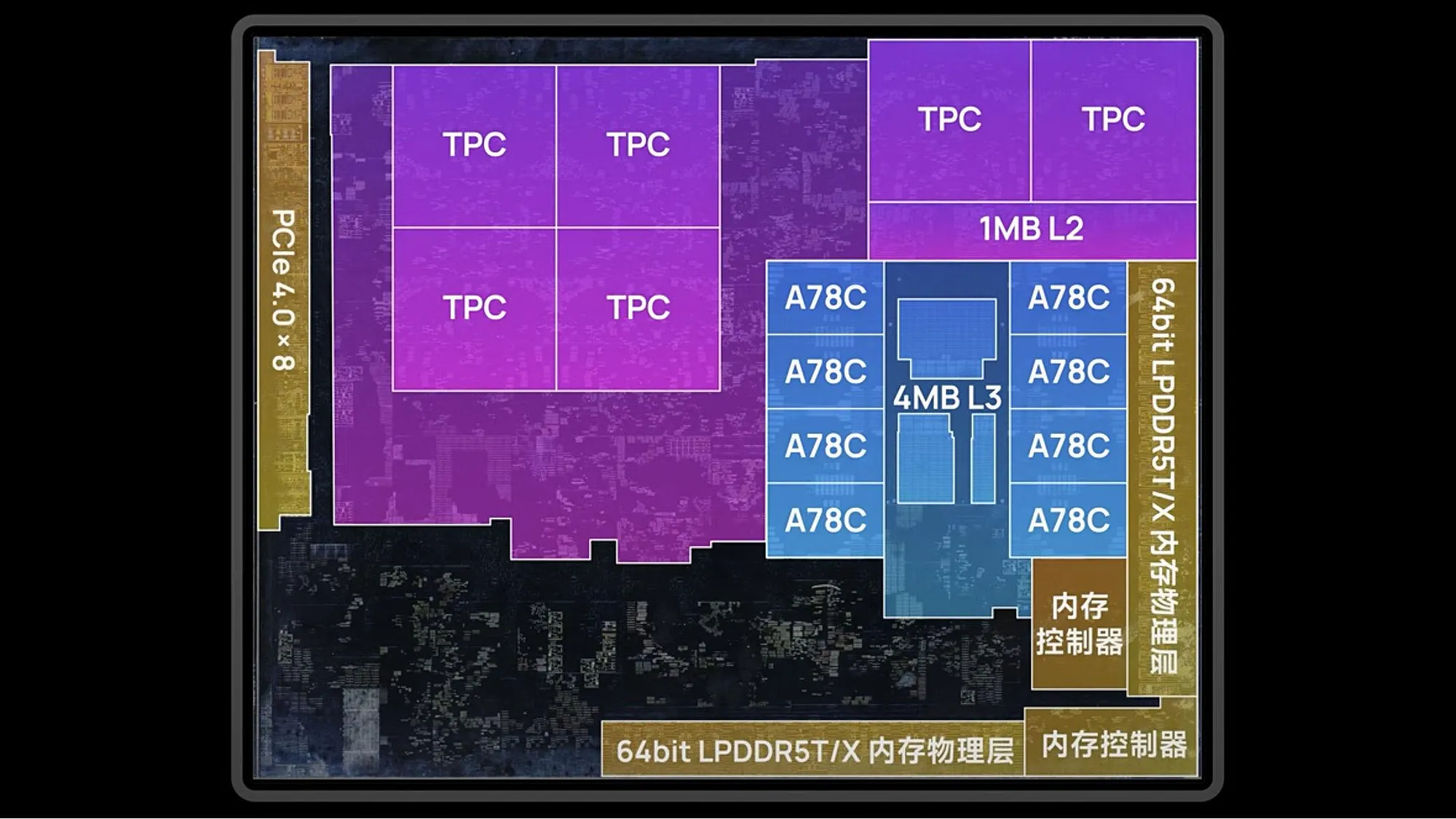
Die analysis and observations from public Git repositories revealed optimizations beyond standard Ampere implementations. The chip includes first-level clock gating from Ada Lovelace, which powers down unused functional units at microsecond timescales – likely improving power efficiency significantly. The GPU layout has separated TPCs (texture processing clusters), which borrows from Ada rather than Ampere, demonstrating a forward-thinking, ‘hybrid’ approach to chip design. A pure Ada chip might have been more cutting-edge, but more expensive and with diminishing returns – while an Ampere chip with Ada features can keep costs down while retaining the same featureset as the current-gen consoles (both Ampere and RDNA2 are from 2020 and are DirectX12 Ultimate compliant).
This contrasts sharply with the original Switch’s stock Tegra X1 – a mobile GPU stretched thin by hybrid demands it wasn’t designed for. As Nvidia CEO Jensen Huang noted at launch: “This chip brings together three breakthroughs: the most advanced graphics ever in a mobile device, dedicated AI processors, and ultra low power operation.”
Power Efficiency: The Real Story
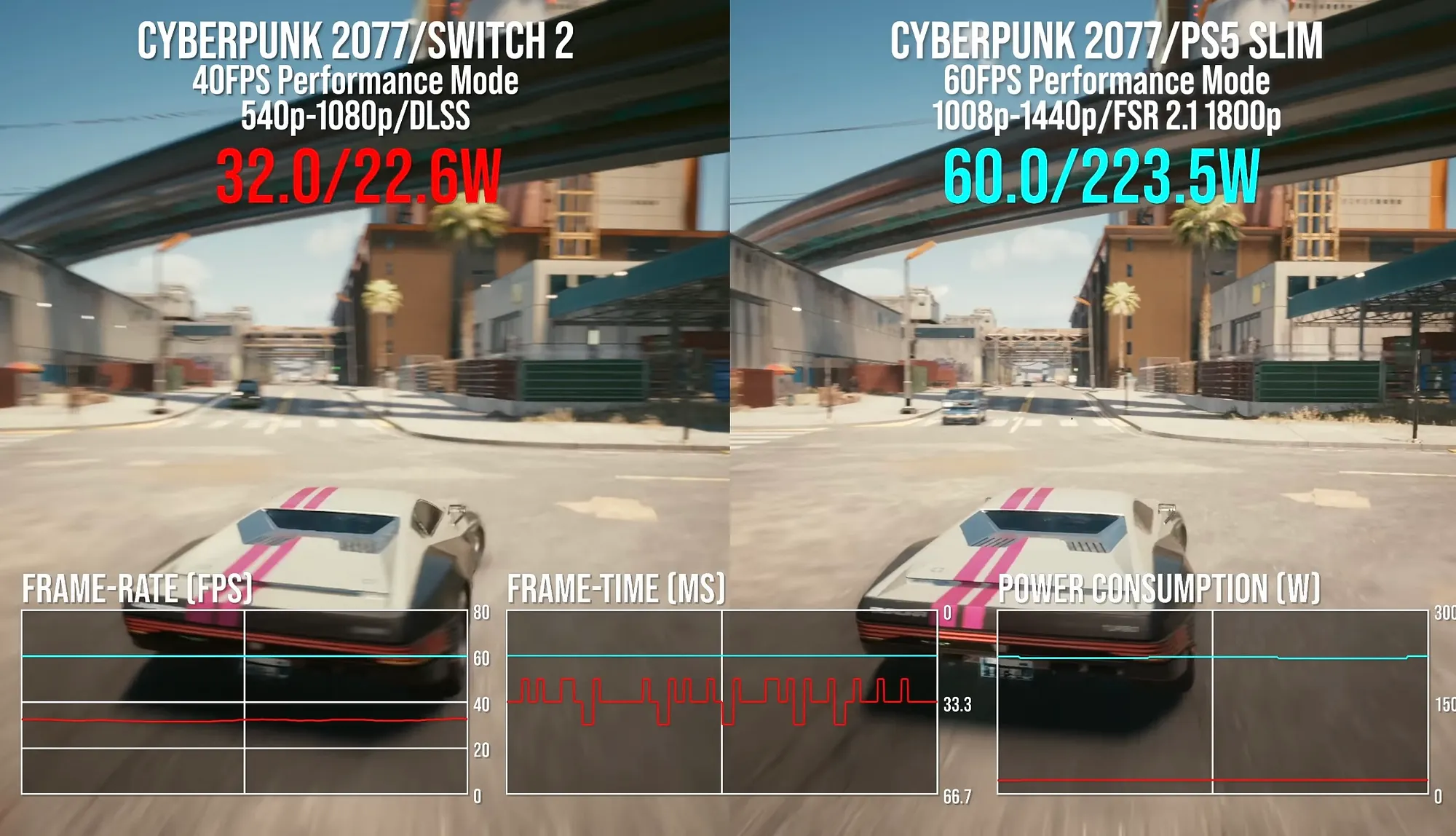
Digital Foundry’s power analysis running Cyberpunk 2077’s benchmark reveals the efficiency advantage in concrete terms:
- Switch 2 docked: 20–22W total system power
- Steam Deck OLED: 29–31W (same benchmark, matched settings)
- PlayStation 5 Slim: ~220W
Switch 2 uses two-thirds the power of Steam Deck OLED while delivering superior docked performance. In handheld mode, Switch 2 draws ~9W while Steam Deck pulls 24–25W – one-third the power while maintaining competitive performance in optimized titles.
The 8nm Question
Samsung’s 8nm process sounds ancient compared to the 7nm TSMC node in Steam Deck, Series S, and other PC handhelds / current-gen consoles, raising reasonable questions about efficiency. But process node comparisons between Switch 2 and x86 handhelds miss a fundamental architectural difference: the combination of ARM CPU architecture and Nvidia’s Ada Lovelace GPU optimizations delivers superior efficiency.
ARM Cortex-A78C cores consume significantly less power per operation than x86 equivalents at similar performance levels – this is why smartphones and tablets universally use ARM. T239’s Ada Lovelace features like first-level clock gating (powering down unused units at microsecond timescales) and separated texture processing clusters further reduce power draw. Hardware-accelerated DLSS and RT further contribute to this by spreading out work between dedicated computational units, rather than pumping clocks into shader cores to force out a prettier image. Switch 2 achieves its efficiency through architecture rather than brute-force lithography. The 8nm node suffices because the underlying design is inherently power-conscious.
The Bandwidth Question
The 12GB LPDDR5X runs at 102.4 GB/s – modest compared to Xbox Series S’s 224 GB/s peak. That comparison ignores how the data actually moves. Effective bandwidth exceeds raw specifications thanks to specific architectural features:
GPU compression: According to Nvidia’s GA102 (Ampere) whitepaper, delta color compression and lossless framebuffer compression have been shown to reduce memory traffic by 40–50% per frame on desktop implementations. While T239’s exact compression efficiency isn’t publicly documented, similar techniques should significantly reduce actual bandwidth required for rendering.
File Decompression Engine: T239 includes hardware-accelerated FDE that unpacks LZ4 compressed files from game packages, offloading decompression work that would otherwise consume CPU cycles. Combined with UFS 3.1 storage, this makes asset loading faster and more power-efficient.
Raw bandwidth comparisons are misleading without accounting for compression advantages and efficient data pipelines built into the architecture.
DLSS: Deep Learning Secret Sauce
DLSS (Deep Learning Super Sampling) is T239’s most important feature. The technology uses AI to reconstruct high-resolution images from lower-resolution input, dramatically reducing GPU workload.
The math is simple: rendering at 720p instead of 1080p reduces pixel count by 44%. 44% fewer pixels to shade, texture, and light. Tensor Cores reconstruct missing detail using temporal data and neural networks, producing output approaching native quality.
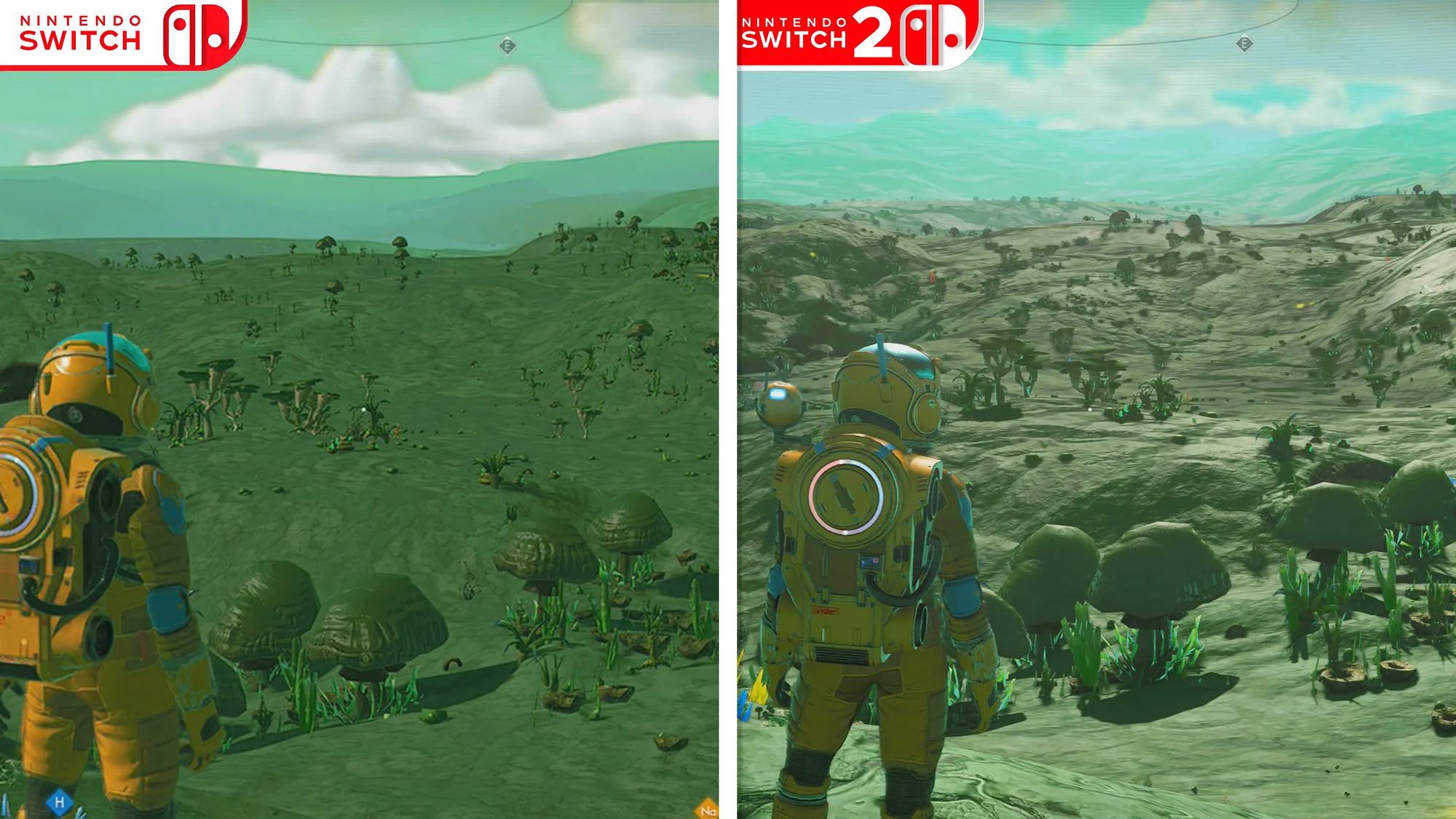
Digital Foundry’s analysis revealed Switch 2 uses two distinct DLSS implementations:
- Standard CNN (Convolutional Neural Network) model (matching PC quality): Cyberpunk 2077, Street Fighter 6
- “Tiny DLSS” (~50% cheaper in frame time): Fast Fusion, Star Wars Outlaws
The lighter variant enables higher resolution targets impossible with standard DLSS given T239’s power budget. Fast Fusion achieves 4K/60fps by rendering at 648p using lighter DLSS. The trade-off: reduced reconstruction quality on moving objects, though static scenes remain sharp.
Even at aggressive upscaling ratios (540p → 720p in handheld mode), output remains clean in motion. DLSS represents domain-specific machine learning in action – AI purpose-built for rendering that aligns perfectly with Nintendo’s power-efficient design philosophy.
Cyberpunk 2077: Day-and-Date Parity
Digital Foundry’s Cyberpunk analysis revealed impressive results for a launch title. Switch 2 targets 30fps at 1080p docked using custom settings blending high, medium, and low presets with bespoke solutions. Internal resolution fluctuates between 720p and 1080p depending on scene complexity, with DLSS reconstructing the final output.
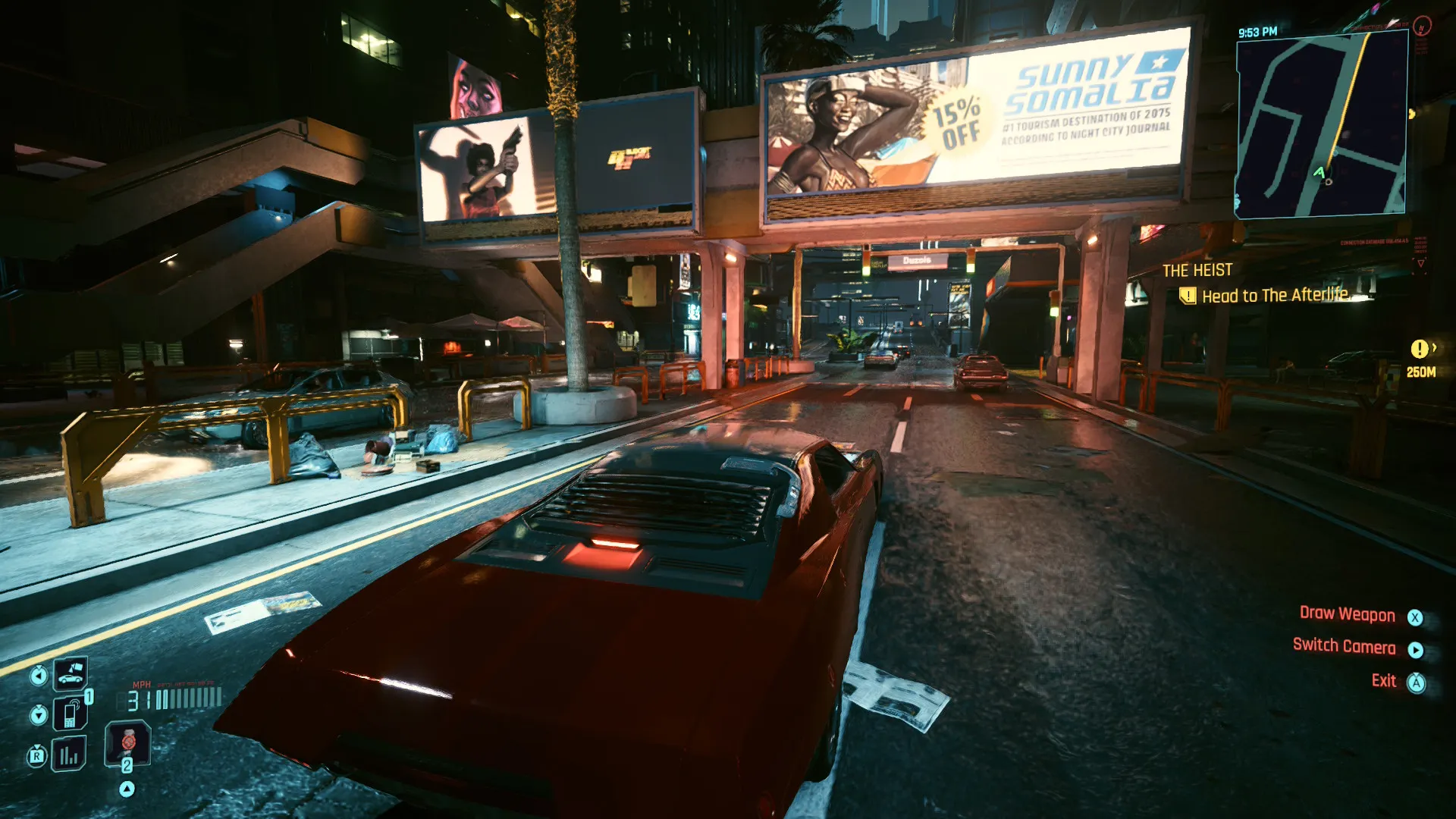
CDPR’s approach reveals T239’s strengths. Rather than uniformly cutting quality, they developed custom solutions: bespoke shadow cascades, modified screen-space reflections, texture streaming rebuilt for UFS 3.1 storage and hardware decompression. The result: texture quality matching or exceeding Series S in several scenes despite lower memory bandwidth (Switch 2 does have 2 GB more total RAM than Series S).
Key findings:
- Texture quality matches/exceeds Xbox Series S in multiple scenes
- Custom screen-space reflections and shadow cascades
- Stable performance in most areas, mid-20s drops in dense Dogtown districts
I put over 80 hours into Cyberpunk on Switch 2. The seamless transitions between handheld and docked modes – picking up a mission on the TV, continuing it on the Metro-North train, finishing it back home – exemplify the hybrid concept’s strength. Yes, it runs at 30fps with occasional drops. Yes, it’s rendering at lower resolutions than PS5. But the convenience of that portability, combined with DLSS maintaining image quality, made it my preferred way to experience Night City despite owning a gaming PC.
The CPU Question
The Phantom Liberty expansion’s Dogtown (dense crowds, complex AI) drops to mid-20s where Series S holds 30fps. Six ARM cores clocked at 1.1 GHz must be weak compared to the high-clocked x86 cores in PC handhelds and stationary home consoles, right?
Reality is more nuanced: developers need time adapting to ARM after years optimizing for x86. The original Switch’s Witcher 3 port demonstrated what aggressive CPU optimization achieves on ARM architecture – Saber Interactive eliminated busy-wait loops, moved cloth simulation to GPU (3–5x faster than CPU), leveraged ARM-specific features like shared L2 cache, and applied cache-friendly memory access patterns. The result: stable 30fps in a game that seemed impossible on Switch 1’s hardware.
Switch 2’s eight Cortex-A78C cores (six available to developers) offer significantly more headroom than Switch 1’s four cores (three available). Current-gen ports can achieve stable performance once developers adapt their optimization strategies to ARM architectures – it’s a learning curve, not an insurmountable barrier. And don’t forget the File Decompression Engine offloading work from the CPU!
The fact that Cyberpunk launched day-and-date with other platforms – handled in-house by CDPR rather than outsourced to port studios – demonstrates Nintendo’s improved third-party support compared to Switch 1’s late, reduced-quality ports.
Star Wars Outlaws: Ray Tracing on Battery Power
Star Wars Outlaws represents, at least to me, a more impressive technical achievement than Cyberpunk: a current-gen-only game built entirely around hardware ray tracing, running on ~10W handheld / ~20W docked.
Outlaws runs at 30fps in both docked and handheld modes. Docked: 1080p output, DLSS upscaling from ~720p internal. Handheld: 720p output, DLSS upscaling from ~540p internal. The 720p internal resolution in docked mode means the GPU renders 2.07 million pixels per frame – 44% fewer than native 1080p. DLSS reconstructs the missing detail using temporal data and AI inference. The game maintains a locked 30fps with occasional drops in dense areas like Toshara’s main city.
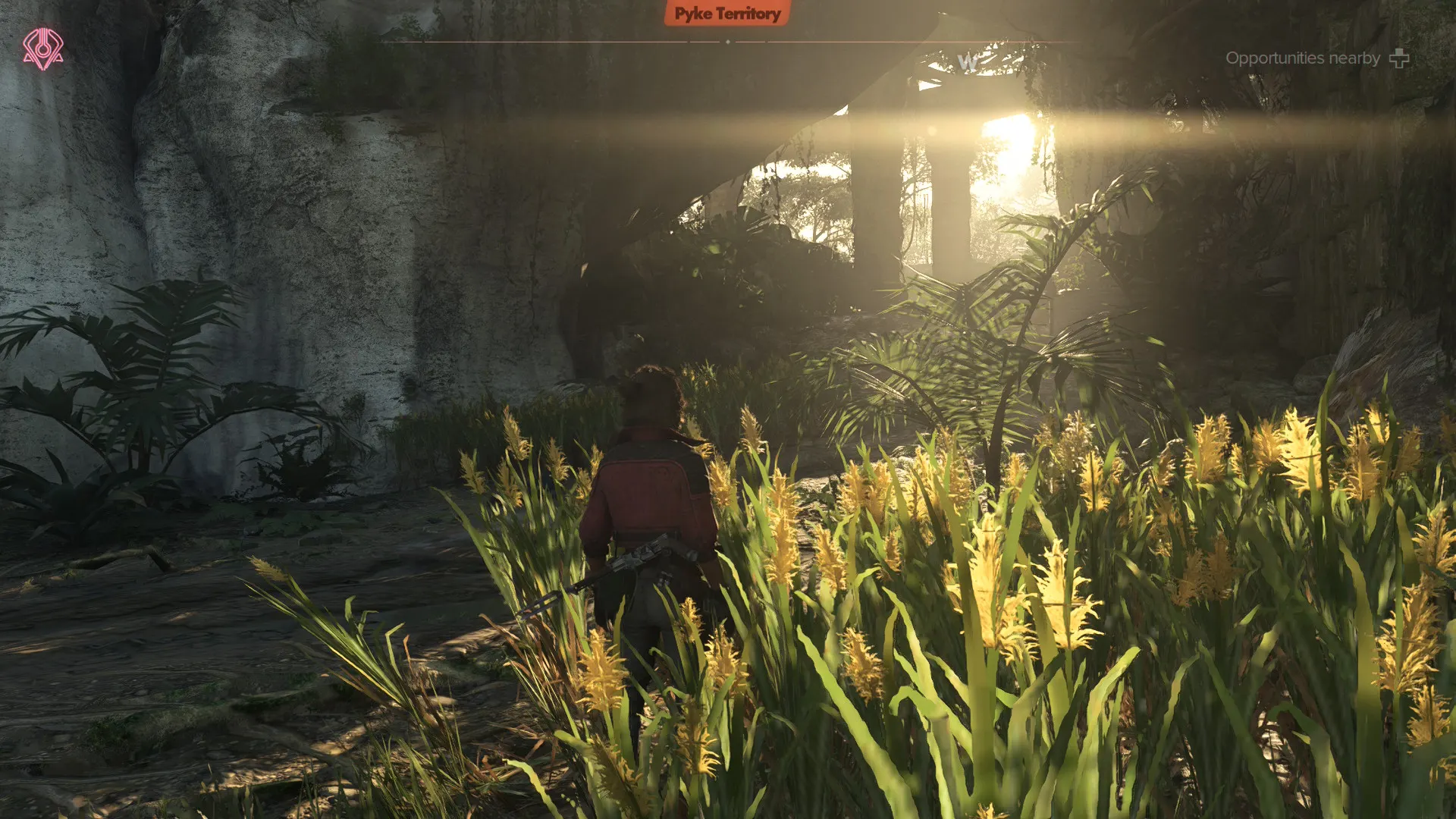
Digital Foundry’s analysis revealed impressive technical achievements. Switch 2 retains hardware ray tracing for diffuse global illumination and reflections – the same core rendering features present on PS5 and Series X, albeit at lower resolution with more noise in the lighting solution. Recent patches have improved texture quality and image stability.
More remarkably, performance proved superior to Series S in some scenarios. While both target 30fps, Series S exhibits frame pacing issues that make camera movement feel stuttery even when the frame counter shows 30fps. Switch 2 maintains consistent frame delivery – a locked 30fps feels smoother than an inconsistent 30fps. Digital Foundry concluded: “Performance is arguably worse on Microsoft’s junior console than on Nintendo’s hybrid.”
Despite Digital Foundry’s reservations about “Tiny DLSS,” I’ve found through 30+ hours with Outlaws that image quality holds up impressively both in stills and in motion, even on my 65-inch 4K television. The lighter DLSS implementation demonstrates remarkable stability for its performance cost.
The ray-traced bounce lighting captures Star Wars’ visual language – illuminated darkness, glowing panels in shadow. RT reflections run at lower resolution but integrate cohesively. Ubisoft maintained the game’s visual identity rather than compromising it for the platform.
Outlaws demonstrates what distinguishes Switch 2 from its predecessor: not just running current-gen games with cutbacks, but running current-gen rendering techniques. The game wasn’t designed to run without ray tracing – it’s the foundation of Snowdrop Engine’s lighting model. The fact that it runs at playable framerates on battery power represents the architectural advantage in action. This isn’t a downport – just a port. Switch 2 is a current-gen portable console.
It’s all in the architecture: the second-generation RT Cores in T239 are more efficient than Turing’s first-generation implementation. Nvidia’s GA102 architecture whitepaper notes 2x ray/triangle intersection performance compared to Turing, plus support for concurrent ray tracing and compute operations – keeping both RT Cores and shader cores active simultaneously rather than leaving units idle between passes.
Port Quality: Developer Commitment Matters
Switch 2’s early library demonstrates a clear pattern: port quality tracks with developer investment and familiarity with the platform’s specialized features, not fundamental hardware limitations.
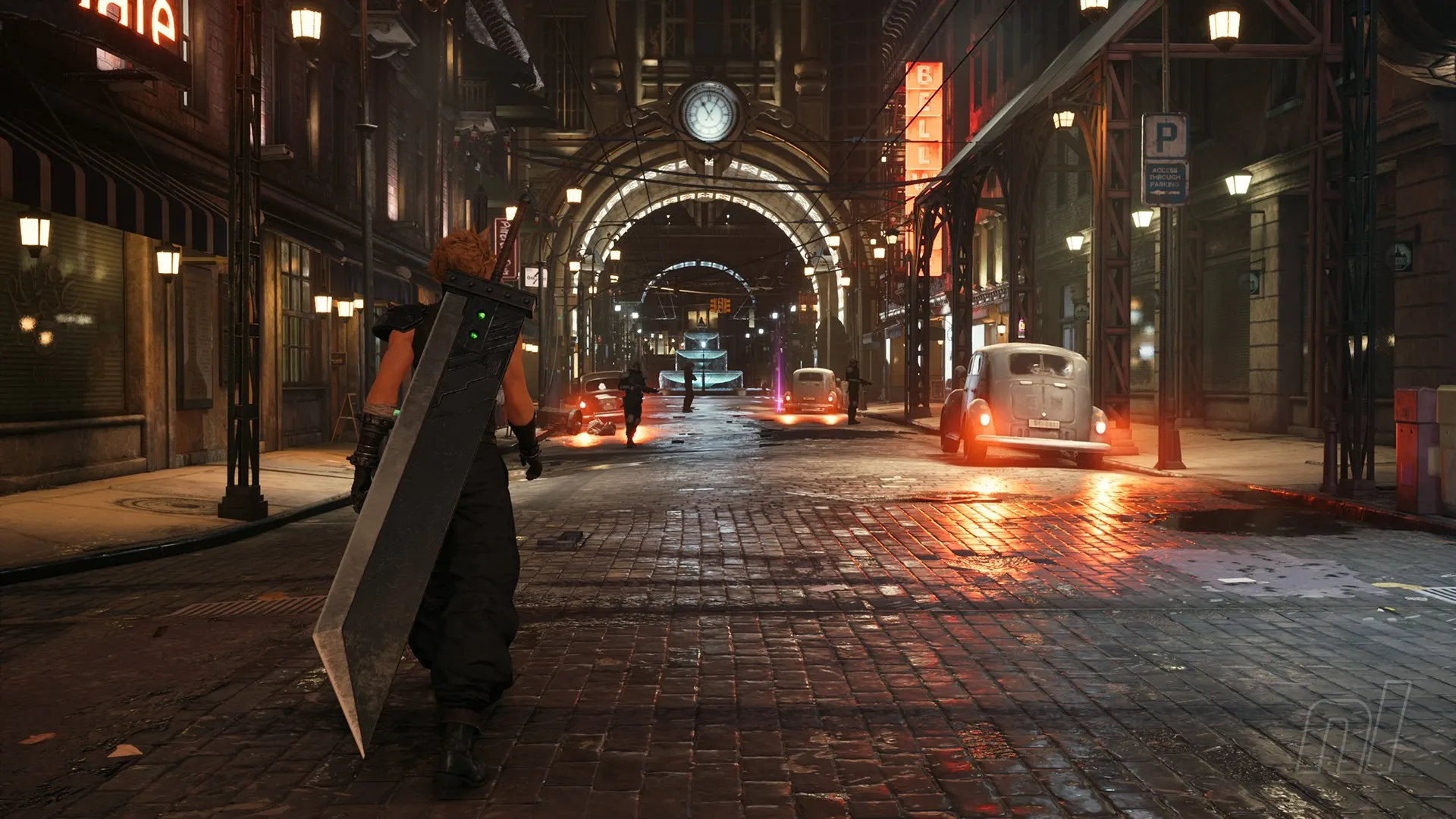
Final Fantasy VII Remake Intergrade exemplifies thoughtful optimization. Digital Foundry called it “the best-looking thing I’ve seen on Switch 2 so far.” Director Naoki Hamaguchi confirmed the port uses PS5 lighting unchanged – “the crucial factor in terms of graphics quality” – while optimizing fog and post-processing for T239’s power constraints. The Switch 2 version retains PS5’s enhanced lighting model, improved textures, and volumetric fog implementations while running at 1080p/30fps docked. This isn’t a PS4 port scaled up, it’s a PS5 port scaled intelligently, preserving the visual elements that define the game’s cinematic presentation.
Persona 3 Reload demonstrates the opposite conundrum. The game launched October 2025 at 30fps with significant framepacing issues that players described as “choppy” and “jarring,” despite maintaining a stable framerate. The port notably doesn’t utilize DLSS – Switch 2’s machine learning upscaling capabilities – which baffled reviewers given that CDPR, Ubisoft, and Square Enix successfully implemented DLSS in far more demanding titles. Reports suggest the resolution target remains 1080p in both modes despite the docked GPU boost, further indicating underutilization. Atlus explicitly stated they “prioritized delivering the Switch 2 version to everyone as quickly as possible” over optimization – a rush to market that DLSS implementation and proper framepacing could have addressed.
The variance in port quality reflects the platform’s learning curve and developer priorities, not impassable hardware constraints. Well-optimized Switch 2 ports aren’t ‘impossible ports’ or technical miracles – they’re simply ports. This represents a generational leap: Switch 2 is a current-gen portable console, not a last-gen device struggling with modern titles. Keep expectations in check as usual – not every developer has the time or resources to maximize hardware potential, and obviously, a portable drawing 20W can’t match a 220W home console.
But when studios invest the engineering resources (custom ARM optimization, DLSS integration, proper power management), Switch 2 delivers current-gen experiences at a fraction of the power consumption. That trade-off – maximum fidelity for portability – is precisely the point.
What This Means Going Forward
Five months into Switch 2’s lifecycle, developers are still learning the hardware. Early ports like Outlaws and day-one Cyberpunk show what’s possible with conservative targets. Future titles will push further as developers optimize for ARM CPUs and exploit T239’s architectural advantages.
More compute-intensive modern games may actually fare better on Switch 2 than lighter titles. Games designed around GPU compute shaders, hardware decompression, and AI upscaling naturally leverage Ampere’s strengths, while older engines built for different architectures may struggle without substantial porting work.
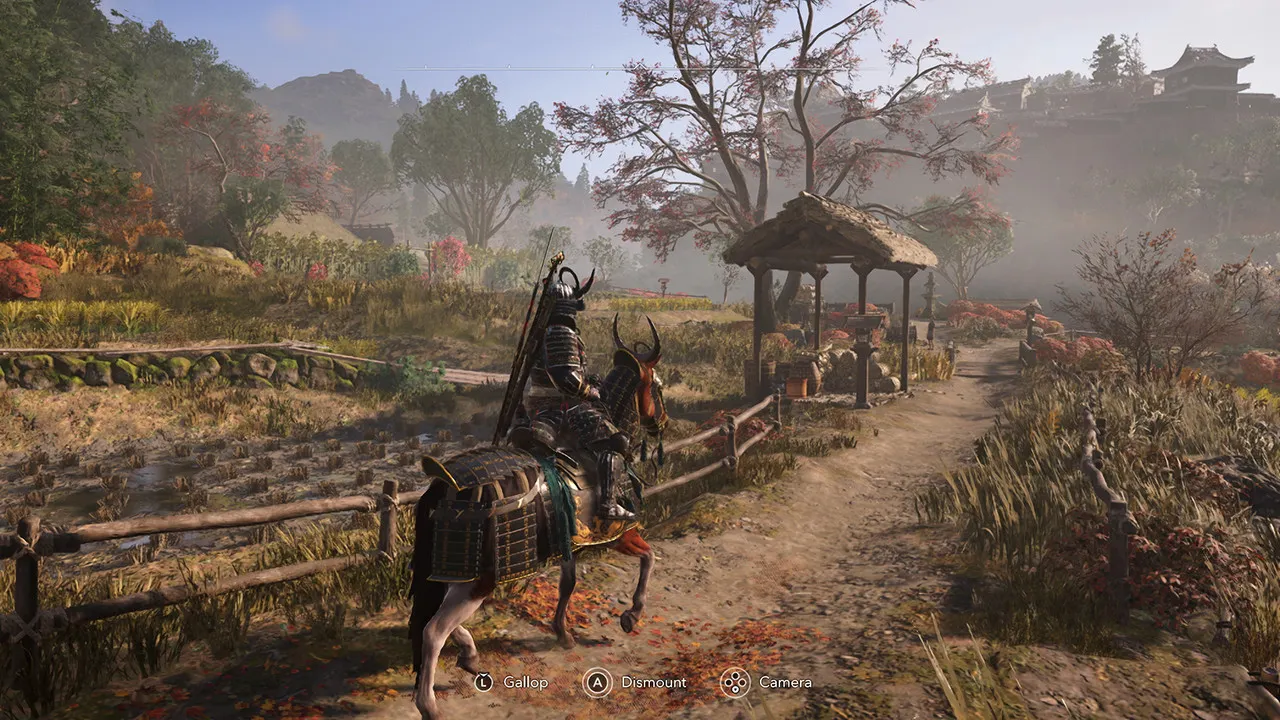
Assassin’s Creed Shadows arrives December 2025 – a demanding current-gen open-world game targeting the platform just seven months post-launch, demonstrating developers are treating T239 as viable hardware for current-generation engines. Indiana Jones and the Great Circle (Spring 2026) is similarly RT-mandatory with no rasterized fallback, demonstrating confidence in T239’s RT cores and DLSS capabilities. Resident Evil Requiem (February 2026) is an incredible statement – the next mainline Resident Evil game, arriving day-and-date with the other console ports, using ray-traced global illumination with DLSS upscaling. Capcom’s director stated “even we were surprised when we first saw it, how beautifully it ran.”
First-party showcases will demonstrate what’s possible with full hardware knowledge and multi-year optimization cycles. The combination of Nvidia’s AI upscaling, efficient memory architecture, hardware-accelerated decompression, and custom power management creates a platform that delivers current-gen gaming experiences at a fraction of the power consumption.
At the End of the Day
Switch 2 runs demanding titles at ~10W handheld / ~20W docked versus 150–200W on PC. That efficiency stems from architectural decisions: DLSS reconstruction, hardware ray tracing, unified memory with compression advantages, hardware decompression offloading CPU work, and purpose-built silicon designed around these features from day one.
Star Wars Outlaws, a current-gen game built entirely around hardware ray tracing, runs at playable framerates on battery power. That’s not a miracle port. It’s proof the architecture works as designed.
I carry this device in my messenger bag. It runs games designed for 200W GPUs. That gap exists because Nintendo built the entire system – silicon, APIs, developer tools – around DLSS, hardware decompression, and power efficiency from the start. Switch 2 fights battles on multiple fronts: thin and light with mass appeal, receiving current-gen ports at reasonable settings, while making a strong argument for its 450 USD price tag in spite of sticker shock. It’s accomplished all three. The console was designed WITH these features from day one – DLSS, RT cores, architectural optimizations – not as crutches to salvage weak specs. The best showings will be software leveraging all acceleration features. Beautiful results in the palm of your hand.
Sources
- Digital Foundry, “Switch 2 Hardware Review” (October 2025)
- Digital Foundry, “Star Wars Outlaws Switch 2 Technical Analysis” (September 2025)
- Digital Foundry, “Cyberpunk 2077 Switch 2 Tech Review” (June 2025)
- Digital Foundry, “Nintendo Switch 2 DLSS Image Quality Analysis” (October 2025)
- Digital Foundry, “Switch 2 vs Steam Deck Cyberpunk 2077 Benchmarked” (June 2025)
- Digital Foundry, “Nintendo Switch 2: Final Tech Specs and System Reservations Confirmed” (May 2025)
- Nvidia Corporation, “NVIDIA Ampere GA102 GPU Architecture Whitepaper” (2020)
- Geekerwan, “This is Nintendo Switch 2’s CPU!” (June 2025)
- Nintendo of America, “Creator’s Voice Special Edition – Nintendo Switch 2’s Custom Processor” (June 2025)
- Roman Lebedev (Saber Interactive), “‘Witcher 3’ on the Nintendo Switch: CPU & Memory Optimization” GDC Talk (2020)
- Famiboards Thread, “Future Nintendo Hardware & Technology Speculation and Discussion” (2022–2025)